
Pumpkin Seed Oil for Thicker, Healthier Hair: What Real Users Say
As more people look for gentle, natural ways to support hair health, pumpkin seed oil for hair growth has quietly gone from a niche supplement to a mainstream favorite. Instead of harsh chemicals or invasive treatments, many men and women are turning to this plant-based oil in the hope of fuller, stronger hair. In our work at Well&Whole, a health supplement trading company, we have seen a steady rise in questions and reviews about pumpkin seed oil capsules and oils for daily use.
Below is a balanced look at what the research suggests, what customers report, and how to evaluate pumpkin seed oil reviews before you decide if it fits your own hair-care strategy.
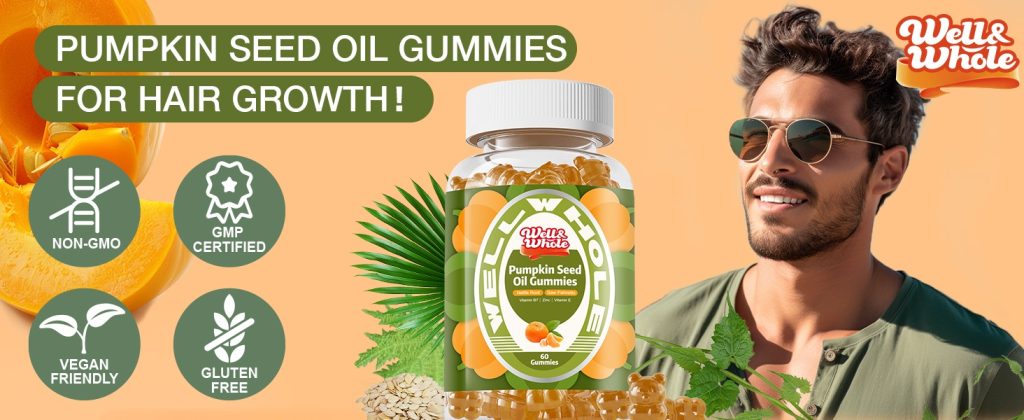
How Pumpkin Seed Oil May Support Hair Growth
Pumpkin seed oil is rich in unsaturated fatty acids, phytosterols, vitamin E, and antioxidants. When people talk about pumpkin seed oil for hair loss or pumpkin seed oil for hair growth reviews, they usually refer to two main potential benefits:
- Hormone balance support: Some studies suggest that phytosterols in pumpkin seed oil may help inhibit 5-alpha-reductase, an enzyme that converts testosterone to dihydrotestosterone (DHT). Because DHT is associated with pattern hair loss in many men (and some women), anything that helps regulate this pathway could support healthier hair density.
- Scalp and follicle nourishment: The oil’s fatty acids and vitamin E may help protect the scalp from oxidative stress and dryness, creating a more favorable environment for hair growth and thickness.
In online reviews, users frequently describe noticing:
- Less hair on their brush or shower drain
- Hair that feels thicker at the roots
- A slower rate of recession at the hairline or crown
These experiences are not universal, and they do not replace clinical trials, but they are consistent enough to make pumpkin seed oil worth considering as part of a broader hair wellness routine.
In short, most positive reviewers say pumpkin seed oil seems to support hair density and reduce shedding over time, especially when combined with a healthy diet and lifestyle — a theme that shows up often in long-tail searches like “pumpkin seed oil hair growth before and after”, “does pumpkin seed oil really work for hair loss”, and “natural supplements for thinning hair in men and women.”
What Real Users Report in Hair Growth Reviews
When you read through pumpkin seed oil hair growth reviews, a few common patterns appear. While each person’s hair story is unique, these trends show up again and again.
1. Timeframe matters
Most reviewers who report good results emphasize that it took time. Many mention using pumpkin seed oil supplements for 3–6 months before they saw visible changes. Some notice early signs like reduced shedding after a few weeks; others only notice a difference when comparing photos over several months. Users who gave up after a few weeks are more likely to leave neutral or negative reviews.
2. Form and dosage differ
People use pumpkin seed oil in two main ways:
- Oral supplements: Softgels or capsules, taken once or twice daily.
- Topical application: Applying the oil directly to the scalp, sometimes mixed with carrier oils or other hair oils.
In reviews, oral supplements are more commonly associated with overall hair density, while topical use is often linked to a healthier, less itchy scalp. Some users combine both approaches and mention better hair thickness and scalp comfort together.
3. Not everyone sees dramatic regrowth
Even among positive reviews, very few people claim overnight regrowth or “miracle” results. Instead, they describe more realistic outcomes: slightly thicker ponytails, fewer strands on pillows, or a slower widening of the part line. Negative reviews often come from those with advanced hair loss, underlying medical conditions, or inconsistent use.
Taken together, the most trustworthy reviews support a simple idea: pumpkin seed oil may help reduce shedding and support hair fullness, but expectations should stay realistic and long-term. This matches how consumers search for it, using long-tail phrases like “best pumpkin seed oil supplement for hair growth results”, “how long to take pumpkin seed oil for hair loss”, and “pumpkin seed oil vs biotin for thinning hair.”
How Well&Whole Customers Use Pumpkin Seed Oil for Hair
At Well&Whole, we focus on sourcing and trading health supplements that are backed by emerging research and consistent customer feedback. When it comes to pumpkin seed oil, our partners and customers typically use it as part of a multi-step hair wellness routine, rather than a stand-alone cure.
Common patterns we see in user feedback include:
- Stacked with other nutrients: Many customers combine pumpkin seed oil with biotin, zinc, vitamin D, or collagen. Reviews suggest that this combination targets different aspects of hair health—scalp condition, follicle strength, and overall nutrient status.
- Integrated into daily habits: Instead of treating pumpkin seed oil like a quick fix, successful users treat it like a daily supplement—taken with meals or used in a weekly scalp massage routine.
- Adjusted to individual needs: Some men with early-stage hair thinning use higher-potency capsules, while women with diffuse shedding sometimes pair a moderate dose with iron or hormone-focused support (guided by a health professional).
From a trade and product-selection standpoint, we pay close attention to:
- Oil purity and extraction method (cold-pressed vs refined)
- Capsule quality and stability over shelf life
- Clear labeling on dosage and usage suggestions
Our internal review analysis shows that customers who understand the gradual nature of hair support, and who choose high-quality pumpkin seed oil, tend to leave more positive, realistic feedback. This aligns with high-intent phrases such as “premium cold pressed pumpkin seed oil for hair growth”, “non-GMO pumpkin seed oil capsules for hair and prostate health”, and “trusted brands pumpkin seed oil reviews for thinning hair.”
How to Evaluate Pumpkin Seed Oil for Hair Growth Reviews
Not all reviews are equally useful. To decide whether pumpkin seed oil might be right for you, it helps to read reviews with a critical eye.
Look for reviews that:
- Mention duration of use: Meaningful hair changes often take several months. Reviews that mention timeframes (e.g., “after 4 months…”) are more helpful than those based on a week or two.
- Describe starting point and expectations: A person with mild, recent thinning will likely have a different experience than someone with long-term, advanced hair loss.
- Include context: Diet, stress levels, styling habits, and other supplements or medications can all affect hair health. Honest reviews usually mention at least some of these factors.
- Avoid extreme claims: Be cautious of reviews promising “complete regrowth in 30 days” or, on the other side, dismissing the product after only a few days of use.
It is also wise to consider the reputation of the brand or supplier. Companies like Well&Whole, which specialize in health supplement trading, typically prioritize product sourcing and quality control, because our partners’ reputations depend on consistent results and safety.
If you see many moderate, realistic reviews that mention reduced shedding and slightly fuller hair over several months, that is often a more credible sign than a few extreme 5-star or 1-star opinions. This evaluation process aligns closely with long-tail user concerns such as “honest pumpkin seed oil reviews for male pattern baldness”, “how to choose the best pumpkin seed oil brand for hair growth,” and “real user experiences pumpkin seed oil capsules for thinning hair.”
Practical Tips Before You Try Pumpkin Seed Oil for Hair
If you are considering adding pumpkin seed oil to your routine, a few practical steps can help you get more from it:
- Set a realistic trial period: Commit to at least 3–6 months before judging results, unless you experience discomfort or side effects.
- Choose quality products: Look for cold-pressed oil, clear dosage information, and suppliers with transparent sourcing. Reputable trading companies and brands are typically more rigorous about quality and batch testing.
- Track your progress: Take photos in similar lighting every month, and pay attention to shedding, hairline, part width, and how your hair feels when you wash and brush it.
- Consider your overall health: Nutrient deficiencies, chronic stress, hormonal imbalances, and scalp conditions can all impact results. Pumpkin seed oil works best as part of a broader hair-health plan, not as a stand-alone fix.
Used thoughtfully, pumpkin seed oil can be a gentle, long-term support for people hoping to preserve hair thickness and reduce shedding, especially when paired with sound nutrition and a healthy lifestyle. This practical approach shows up frequently in searches like “how to use pumpkin seed oil for natural hair regrowth,” “daily routine with pumpkin seed oil and biotin for hair,” and “best way to take pumpkin seed oil for thinning hair in women.”
Frequently Asked Questions
1. How long does it take to see results from pumpkin seed oil for hair growth?
Most users who report positive changes mention a timeframe of about 3–6 months of consistent use. Some notice reduced shedding earlier, but visible improvements in thickness usually take longer. Taking photos and tracking shedding can help you see subtle progress over time.
2. Is pumpkin seed oil better taken as a capsule or applied directly to the scalp?
Both approaches can be useful. Capsules or softgels provide internal nutritional support and potential hormone pathway benefits, while topical use may help soothe and nourish the scalp. Many people use a combination: daily capsules plus a weekly scalp massage with pumpkin seed oil or a blend of hair-friendly oils.
3. Are there any side effects or people who should avoid pumpkin seed oil?
Pumpkin seed oil is generally well tolerated for most healthy adults when used as directed. However, anyone with allergies to pumpkin or seeds, those on medication, pregnant or breastfeeding women, or individuals with complex medical conditions should consult a healthcare professional before starting any new supplement. As a trading company, Well&Whole always recommends discussing supplements with a qualified practitioner, especially when hair loss may be linked to underlying health issues.