
When people talk about natural ways to support thicker, fuller hair, pumpkin seed oil often comes up as a quiet favorite. Many know it as a nutritional oil used in supplements, but more and more consumers are asking: is topical pumpkin seed oil good for hair growth, or is it only effective when taken orally? As a health supplement trading company working with the Well&Whole brand, we see this question often from both retailers and end users.
Below is a clear, research‑based look at how pumpkin seed oil may support your scalp and hair when used topically, what to expect in real life, and how to use it alongside other hair wellness strategies.
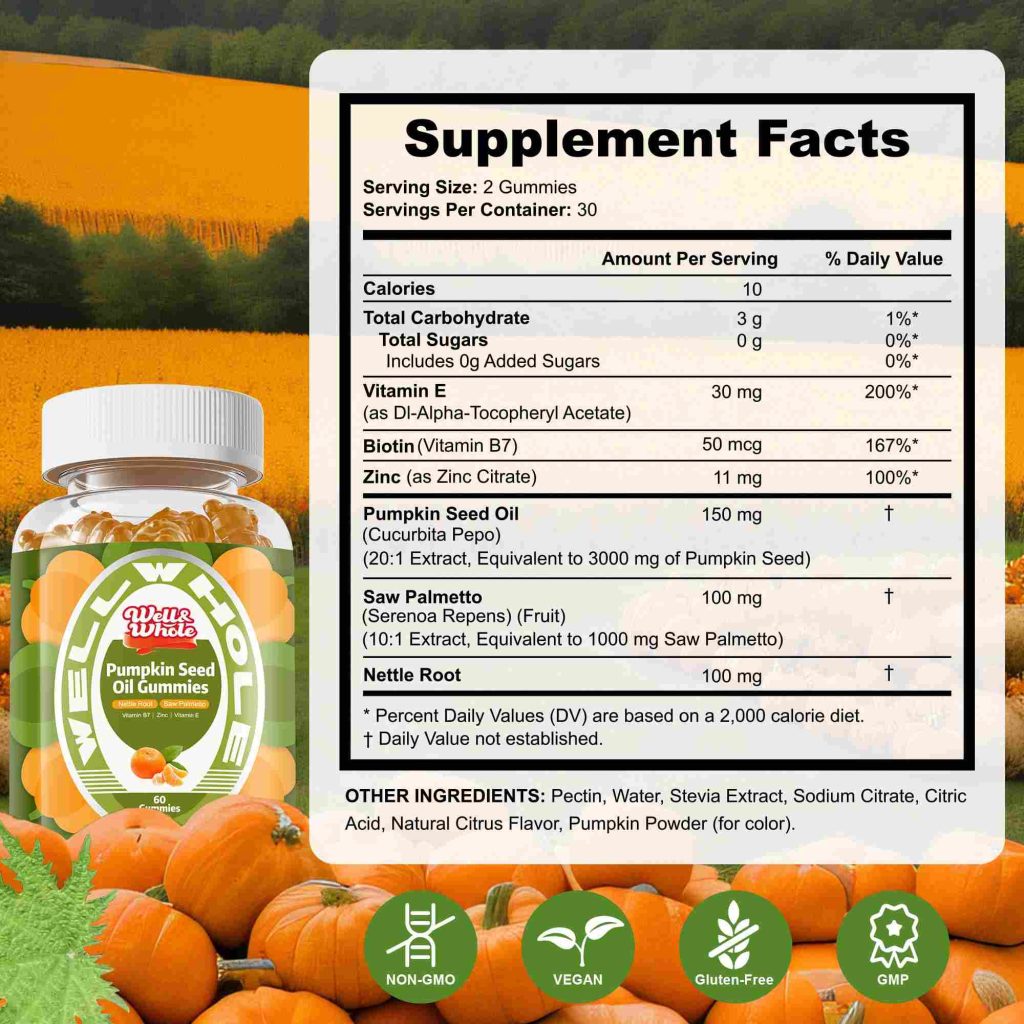
How Pumpkin Seed Oil May Support Hair Growth
Pumpkin seed oil is rich in unsaturated fatty acids, vitamin E, and plant compounds known as phytosterols. Together, these components may create a more favorable environment for hair follicles.
- Scalp barrier and moisture: The fatty acid profile (including linoleic and oleic acids) helps support the skin’s natural barrier. A healthier barrier means less transepidermal water loss, which can reduce dryness and flakiness on the scalp.
- Antioxidant support: Vitamin E and other antioxidants in pumpkin seed oil help neutralize oxidative stress on the scalp. Oxidative stress is thought to contribute to premature aging of hair follicles and weaker hair shafts.
- DHT‑related support (indirectly): Oral pumpkin seed oil has been studied for its potential to interfere with 5‑alpha‑reductase, the enzyme that converts testosterone to DHT, a hormone linked to androgenetic hair thinning. While most of this research involves ingestion, some experts believe that topical pumpkin seed oil for hair loss may offer mild, local support through similar mechanisms.
From a practical standpoint, many users report that the oil leaves hair feeling softer and looking shinier, even before any change in density occurs. That makes pumpkin seed oil a reasonable option for natural hair thickening remedies that are gentle enough for longer‑term, continuous use.
In short, topical pumpkin seed oil may not be a miracle cure, but it can contribute to a healthier scalp environment, which is one of the foundations of better hair growth and reduced shedding.
Topical vs Oral Use: What Does The Evidence Say?
Most of the formal studies on pumpkin seed oil and hair growth involve oral supplementation, not topical application. For example, clinical work has shown that daily oral intake of pumpkin seed oil can support increased hair count in certain types of pattern hair loss. However, this does not mean that topical use is ineffective; it simply means it is less studied.
When you apply pumpkin seed oil to the scalp:
- You are working locally, delivering fatty acids and antioxidants directly where they’re needed.
- You may improve scalp comfort—less tightness, dryness, or mild irritation—issues that often accompany chronic hair thinning.
- You can combine it with other active ingredients (like caffeine, rosemary oil, or niacinamide) in multi‑ingredient hair serums without adding harsh chemicals.
Well‑designed topical formulas often pair pumpkin seed oil with lighter carrier oils to support better absorption and to avoid weighing down finer hair types. This is where brands like Well&Whole focus: integrating pumpkin seed oil into balanced, cosmetically elegant bases that suit everyday use.
To summarize, oral use currently has stronger clinical backing, but topical pumpkin seed oil for thinning hair still plays a supportive role—especially when combined with an overall hair wellness strategy and used as part of a consistent scalp‑care routine.
How To Use Pumpkin Seed Oil On The Scalp Effectively
For most people, the biggest question is not just “does it work,” but how to use pumpkin seed oil for hair growth in a realistic way that fits into a busy routine.
Here are practical guidelines:
- Choose the right format: Pure, cold‑pressed pumpkin seed oil is usually thicker and works best as a pre‑shampoo treatment. Lighter blends or serums are better for leave‑in use. If your goal is consistent daily use, a lightweight, non‑greasy serum from a trusted brand like Well&Whole is usually more sustainable.
- Apply to the scalp, not just the hair: Part the hair and apply a few drops directly to the scalp, then massage gently for 3–5 minutes. This improves local circulation and helps distribute the oil around the follicles.
- Frequency: Start with 2–3 times per week. People with drier scalps may tolerate daily use, while those with oily or acne‑prone skin might prefer less frequent applications.
- Leave‑in vs rinse‑out: For a heavier oil, leave it on for 30–60 minutes before shampooing. For lightweight formulas, leaving them in overnight can support overnight hair growth treatments without making the hair look greasy in the morning.
- Combine with lifestyle and nutrition: Topical care works best alongside adequate protein intake, micronutrients (like zinc and biotin), and stress management. Many consumers combine pumpkin seed oil capsules for hair growth with a topical serum for a more holistic approach.
In essence, consistent, targeted use on the scalp—rather than occasional, random application on the hair shaft—is what makes topical pumpkin seed oil a realistic part of an effective hair growth routine and a valuable component in natural hair regrowth products.
Who Might Benefit Most (And Who Should Be Cautious)
Not everyone responds to the same hair product in the same way. Topical pumpkin seed oil for hair regrowth tends to be most appropriate for:
- Men and women in early stages of thinning who prefer non‑drug hair loss solutions
- People with dry, sensitive, or mildly irritated scalps who want to strengthen the scalp barrier
- Individuals looking to complement existing treatments (like minoxidil) with a gentler, plant‑based option
However, there are a few situations where caution makes sense:
- Allergies or sensitivities: Anyone with known seed or nut allergies should patch‑test pumpkin seed oil on a small area of skin first, or consult a healthcare professional before use.
- Very oily or acne‑prone scalps: Heavier oils can sometimes exacerbate build‑up or folliculitis. In these cases, a lighter, professionally formulated serum may be better than pure oil.
- Advanced or sudden hair loss: Rapid shedding, patchy hair loss, or scalp inflammation should be evaluated by a dermatologist, as these can indicate underlying conditions that require medical treatment.
Overall, topical pumpkin seed oil works best for mild to moderate thinning and as a preventive, long‑term scalp‑care strategy. It is not a replacement for medical therapy in more severe or sudden forms of hair loss, but it can be an important supportive element within broader hair loss prevention strategies.
The Role Of Quality And Brand Trust
Because pumpkin seed oil is a natural ingredient, quality and sourcing matter. Factors like cold‑pressing, storage, and formulation can influence how well the oil retains its beneficial compounds.
As a health supplement trading company, we see increasing demand from partners who want:
- Reliable supply chains and consistent quality standards
- Transparent labeling and third‑party verification where possible
- Synergistic formulations that combine pumpkin seed oil with other evidence‑backed nutrients
The Well&Whole line is built around this idea of integrated wellness: not just selling a single trending ingredient, but designing hair and scalp products that align with nutritional science and consumer expectations for clean, effective formulas. For example, combining pumpkin seed oil with carefully selected botanical extracts and supportive vitamins can offer a more complete solution than using any one ingredient in isolation.
In conclusion, when consumers ask “is topical pumpkin seed oil good for hair growth,” the most accurate answer is that it offers gentle, multi‑factor support for scalp and hair health—especially when used consistently, sourced from reputable brands like Well&Whole, and paired with overall lifestyle and nutritional strategies that support normal hair growth.
FAQ
- How long does it take to see results from topical pumpkin seed oil for hair growth?
Most users should plan on at least 3–6 months of consistent use before judging results. Early changes are often subtle—less shedding, improved texture, and a healthier scalp—before visible changes in density appear. - Can I use pumpkin seed oil on my scalp every day?
You can, but it depends on your scalp type and the formula. Pure oil may feel heavy if used daily, while lightweight serums formulated with pumpkin seed oil (such as those from Well&Whole) are usually designed for more frequent use. Start with 2–3 times per week and adjust based on how your scalp responds. - Is topical pumpkin seed oil enough on its own to stop hair loss?
For most people, no single product is enough on its own. Topical pumpkin seed oil is best seen as part of a broader routine that may include oral supplements, balanced nutrition, stress management, and—in some cases—evidence‑based medical treatments, depending on the cause and severity of the hair loss.