
Pumpkin Seed Oil vs Pumpkin Seeds for Hair Growth: What Really Works?
As more people look for natural ways to support hair health, pumpkin seed oil and whole pumpkin seeds keep coming up in conversations. Both are rich in nutrients and fit well into a wellness routine, but when it comes to hair growth, they don’t work in exactly the same way. For a nutrition‑focused brand like Well&Whole, understanding the differences helps us recommend solutions that are both practical and science‑aware.
How Pumpkin Seed Oil May Support Hair Growth
Pumpkin seed oil is extracted from the seeds of the pumpkin and is naturally rich in plant compounds and healthy fats. Some early research suggests that pumpkin seed oil may help support hair density and reduce shedding, especially in people concerned about thinning hair.
One proposed mechanism is its potential to act as a mild 5‑alpha‑reductase inhibitor. This enzyme is involved in converting testosterone to DHT, a hormone that can contribute to pattern hair loss in genetically predisposed individuals. While more large‑scale human studies are needed, this possible action is why pumpkin seed oil is often included in hair growth supplements for thinning hair.
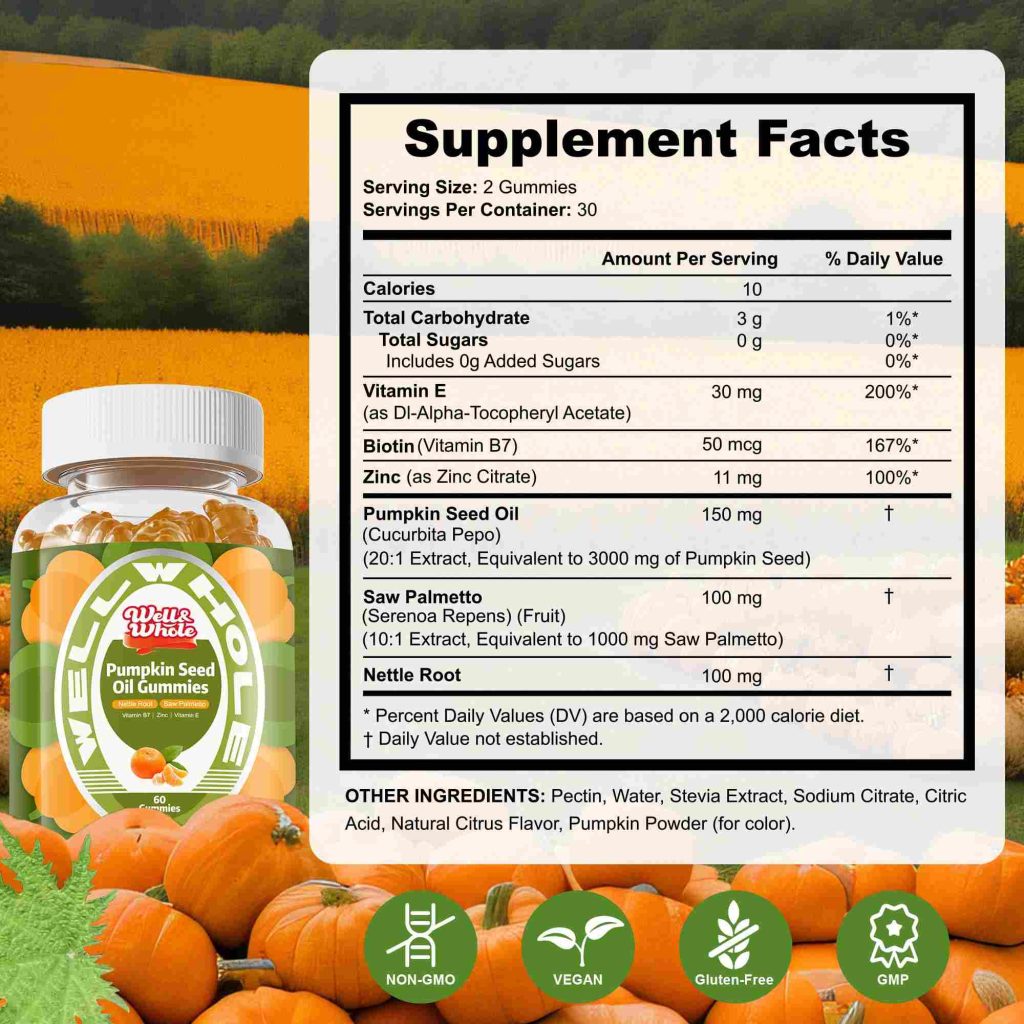
Beyond hormones, pumpkin seed oil provides:
- Essential fatty acids that support scalp barrier function
- Vitamin E and other antioxidants that may help protect hair follicles from oxidative stress
- Phytosterols that might support overall scalp health
For many people, the main advantage of pumpkin seed oil is convenience. It can be taken in softgel form, added in controlled doses to formulations, or used topically in hair oils and serums. This makes it easy to build a consistent routine, which is crucial for any natural remedies for hair growth.
Section takeaway: Pumpkin seed oil offers a concentrated, convenient source of hair‑supportive nutrients and potentially beneficial plant compounds, making it a strong candidate for people searching for pumpkin seed oil supplements for hair growth.
What Whole Pumpkin Seeds Offer for Hair and Overall Health
Whole pumpkin seeds are a nutrient‑dense snack and a useful ingredient in a balanced diet. Unlike the oil, which focuses on fats and certain plant compounds, pumpkin seeds deliver a broader range of nutrients that support overall wellness—and indirectly, hair.
Key nutrients in pumpkin seeds include:
- Plant‑based protein, providing building blocks for keratin, the main structural protein in hair
- Zinc, essential for scalp health, sebum balance, and normal hair follicle function
- Iron, which helps carry oxygen to hair follicles
- Magnesium and B vitamins, important for energy metabolism and stress support
Because pumpkin seeds are a whole food, they contribute to general nutritional sufficiency rather than targeting hair alone. In many cases of diffuse hair thinning, suboptimal nutrient status or restrictive eating patterns play a role. Adding pumpkin seeds into meals can help fill some of these gaps as part of an overall hair growth diet plan.
From a practical standpoint, pumpkin seeds work best when:
- Used regularly in salads, oatmeal, smoothies, or as snacks
- Combined with other nutrient‑rich foods like leafy greens, legumes, and lean proteins
- Integrated into a long‑term lifestyle approach instead of a quick fix
Section takeaway: Pumpkin seeds are a valuable whole‑food option that can contribute to better nutritional status and, over time, support healthy hair growth naturally through improved overall wellness.
Pumpkin Seed Oil vs Pumpkin Seeds: Which Is Better for Hair?
When comparing pumpkin seed oil and pumpkin seeds for hair growth, the question isn’t which is “good” or “bad,” but which is more suitable for your goals and routine.
Concentration vs. completeness
- Pumpkin seed oil is more concentrated in fats and certain plant sterols that may influence hair and scalp physiology. This makes it easier to standardize doses in hair growth supplements for women and men.
- Whole pumpkin seeds are less concentrated per serving but supply a broader nutrient profile, supporting general health, which often reflects in hair quality.
Consistency and dosage
- With oil (especially in capsule form), it is straightforward to take a consistent dose daily. Consistency is critical for any hair‑focused regimen because hair growth cycles are slow.
- With seeds, intake can vary from day to day, and it may be harder to reach a consistent level of specific nutrients unless you are very deliberate with your diet.
Digestive and lifestyle factors
- Some people with sensitive digestion or specific dietary restrictions find it easier to tolerate oil rather than large quantities of seeds.
- Others prefer whole‑food approaches and like the texture, satiety, and versatility of pumpkin seeds in meals.
In the context of Well&Whole, we often see them as complementary rather than competing. A structured supplement that includes pumpkin seed oil can provide targeted support for those who are especially concerned about thinning hair, while a diet rich in pumpkin seeds contributes to underlying nutritional resilience.
Section takeaway: There is no one‑size‑fits‑all winner; pumpkin seed oil tends to be more targeted and consistent for hair‑specific goals, while pumpkin seeds shine as part of a balanced hair growth nutrition plan.
How To Use Pumpkin Seed Oil and Seeds in a Hair‑Friendly Routine
To get the most from either option, it helps to think in terms of daily habits rather than isolated products.
Using pumpkin seed oil
- Consider a daily supplement that uses high‑quality, cold‑pressed pumpkin seed oil in controlled doses.
- If using topical blends, apply regularly to the scalp with gentle massage to support circulation and absorption.
- Combine with other hair‑support nutrients like biotin, zinc, and antioxidants in a well‑designed formula.
Using pumpkin seeds
- Add a small handful of raw or lightly roasted seeds to salads, yogurt, or smoothie bowls.
- Choose unsalted or lightly salted versions to avoid excess sodium.
- Pair them with vitamin C‑rich foods and iron sources to support better nutrient utilization.
Across both approaches, other lifestyle factors matter: stress management, sleep quality, gentle hair care practices, and avoidance of aggressive styling all influence outcomes. Any holistic hair growth routine should factor these in.
Section takeaway: For most people, using pumpkin seed oil in a structured supplement while regularly eating pumpkin seeds offers a balanced strategy, especially when combined with good sleep, stress management, and scalp‑friendly habits within a broader hair growth wellness routine.
Well&Whole’s Perspective on Pumpkin‑Based Hair Support
As a health‑focused trade company, Well&Whole works with partners who value evidence‑informed formulations and clean ingredient sourcing. Our approach to pumpkin seed oil and pumpkin seeds reflects that.
When we evaluate pumpkin seed oil for inclusion in hair‑support products, we look at:
- Oil extraction methods (cold‑pressed vs. high‑heat)
- Oxidation control and freshness
- Synergy with other ingredients like saw palmetto, zinc, and botanical antioxidants
For pumpkin seeds as a raw material, we prioritize:
- Reliable origins and consistent quality
- Minimal processing to preserve micronutrients
- Compatibility with functional foods or fortified products that complement hair and scalp needs
We do not position pumpkin seed oil or pumpkin seeds as a cure for hair loss. Instead, we see them as meaningful components of a broader strategy: targeted supplementation, nutrient‑dense diet, and supportive lifestyle choices. This balanced view helps our partners develop premium hair growth supplements that are honest, practical, and aligned with long‑term wellness.
Section takeaway: From the Well&Whole standpoint, both pumpkin seed oil and pumpkin seeds can play useful roles in hair‑focused formulations and nutrition programs, especially when framed as part of a realistic and sustainable natural hair growth support regimen.
FAQs
1. Does pumpkin seed oil really help with hair growth?
Early research suggests that pumpkin seed oil may support hair density and reduce shedding in some individuals, possibly through its effect on hormones and scalp health. However, results vary by person, and it should be seen as supportive, not a stand‑alone cure, within a broader hair growth treatment plan.
2. How long does it take to see results from pumpkin seed oil or pumpkin seeds?
Hair growth is slow, so it often takes at least 3–6 months of consistent use to notice changes in thickness or shedding. Combining pumpkin seed oil supplements with a nutrient‑rich diet that includes pumpkin seeds and other whole foods usually gives more reliable long‑term hair growth results.
3. Can I just eat pumpkin seeds instead of taking pumpkin seed oil supplements?
You can rely on seeds alone, especially if you prefer whole foods, but they are less concentrated than the oil. For people with visible thinning or higher concern, a combination of a well‑formulated pumpkin seed oil supplement and regular pumpkin seed intake may offer more targeted support for thinning hair and hair loss.